Your Content Is Working. Just Not on Revenue.
Traffic is up. Engagement looks good. Yet revenue isn’t moving. Most B2B SaaS content attracts attention—but rarely guides buyers to confident decisions. This article shares a practical, three-layer framework that aligns content to real buyer moments, shortens sales cycles, and turns your existing content into a revenue driver.
Your Content Is Working. Just Not on Revenue.
Why your best content isn’t closing deals — and how to fix the gap.
At some point, every founder has this moment.
You open your analytics.
Traffic is up.
Engagement looks fine.
And revenue hasn’t moved.
Not a little.
Not slowly.
Just… not at all.
This is usually the point where teams add more content instead of asking a harder question.
And content starts to feel pointless.
Not because it’s bad.
But because it’s doing something — just not the thing you actually need.
This isn’t about creating more content.
It’s about making what you have actually support buying decisions.
The quiet mistake most SaaS teams make
Most B2B SaaS content is built to attract attention.
Very little of it is built to carry intent.
So you end up with:
- blog posts people enjoy
- LinkedIn posts that get reactions
- traffic that looks healthy in reports
Sales still has to explain everything live.
Buyers arrive informed — but uncertain.
And no one can quite explain why conversion feels unpredictable.
That’s not a content quality problem.
That’s a structure problem.
What founders don’t say out loud
Here’s the part most teams don’t admit:
“I don’t actually know which content is supposed to make us money.”
There’s content “for SEO.”
Content “for brand.”
Content “for awareness.”
When revenue stalls, everything starts to blur together.
You might rank for competitive keywords.
You might publish consistently.
And still hear sales say, “We have to walk them through this every time.”
A simple shift that changes everything
Stop thinking in terms of content types.
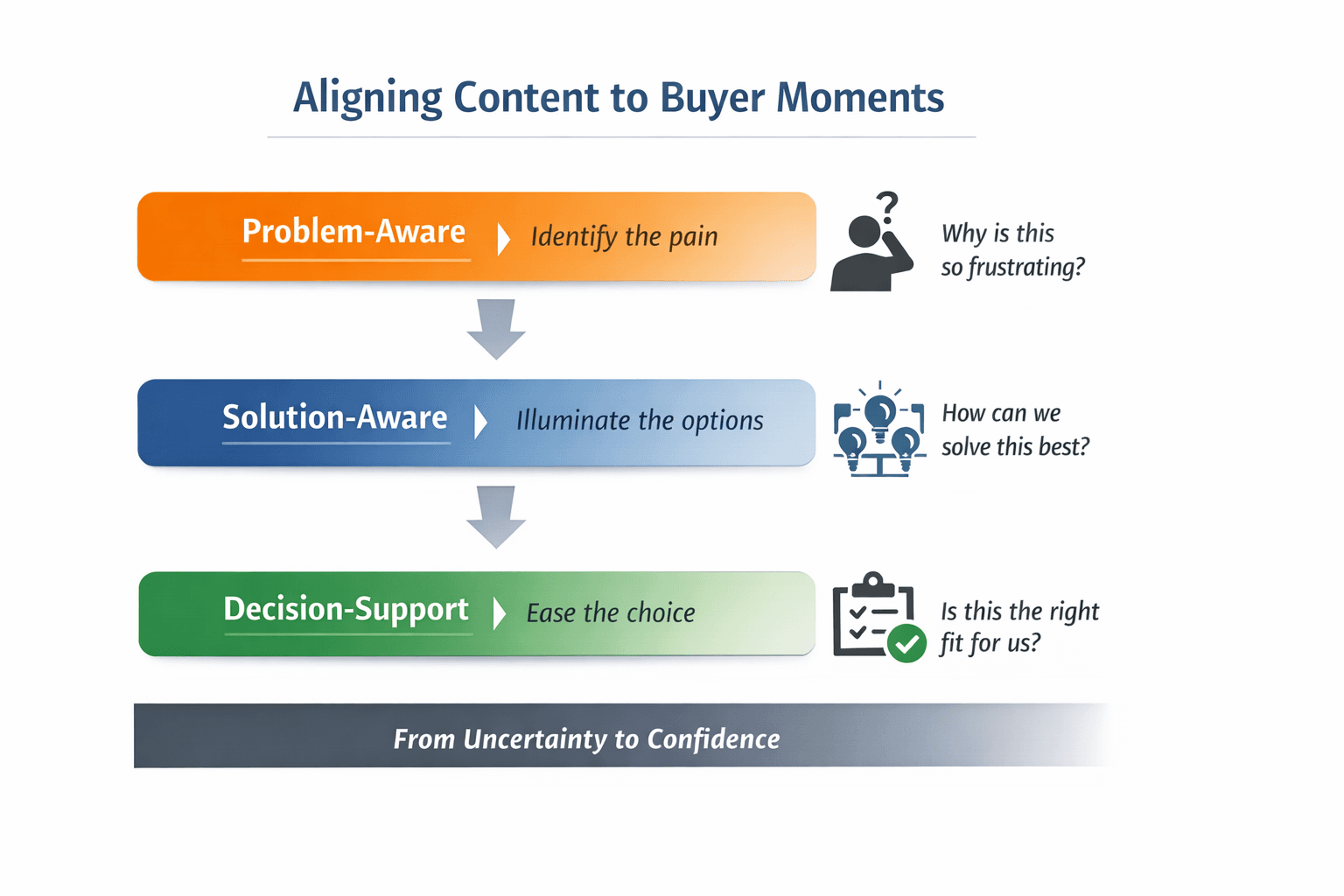
Start thinking in terms of buyer moments.
Source: author
Not personas.
Not funnels with fancy names.
Just real moments when a buyer is thinking:
- “This problem is costing me more than I expected.”
- “I need to understand this better before I mess it up.”
- “I’m comparing options and don’t want to choose wrong.”
This isn’t TOFU/MOFU/BOFU repackaged.
Funnel stages describe where buyers are in your process.
Buyer moments describe where they are in their own head.
That’s not a semantic difference.
It changes what you write — and when you deploy it.
Look, revenue happens when your content shows up inside those moments, not just in search results.
The practical framework
Think of your content in three clear layers.
1. Problem-aware content
This content doesn’t pitch.
It names the problem better than the buyer can.
Examples:
- “Why your pipeline looks full but feels fragile”
- “The hidden cost of ‘free’ growth in PLG”
If a founder doesn’t feel understood here, nothing else matters.
This layer creates emotional safety.
Without it, buyers skim — and move on.
2. Solution-aware content (guided clarity)
This is where most SaaS teams panic and start selling.
Don’t.
This layer helps buyers think clearly, not act fast.
It covers how different approaches actually work in practice, the trade-offs most vendors avoid talking about, and what usually breaks as companies scale.
Trust builds — not because you say the right things, but because you don’t avoid the hard ones.
3. Decision-support content
This is the layer most teams barely build.
Not demos.
Not feature lists.
Content that answers:
- “Is this right for a company like mine?”
- “What happens after I sign?”
- “What’s the real risk here?”
Case studies.
Comparison pages.
Implementation stories written like real experiences — not marketing artifacts.
This is the content your sales team keeps recreating on live calls.
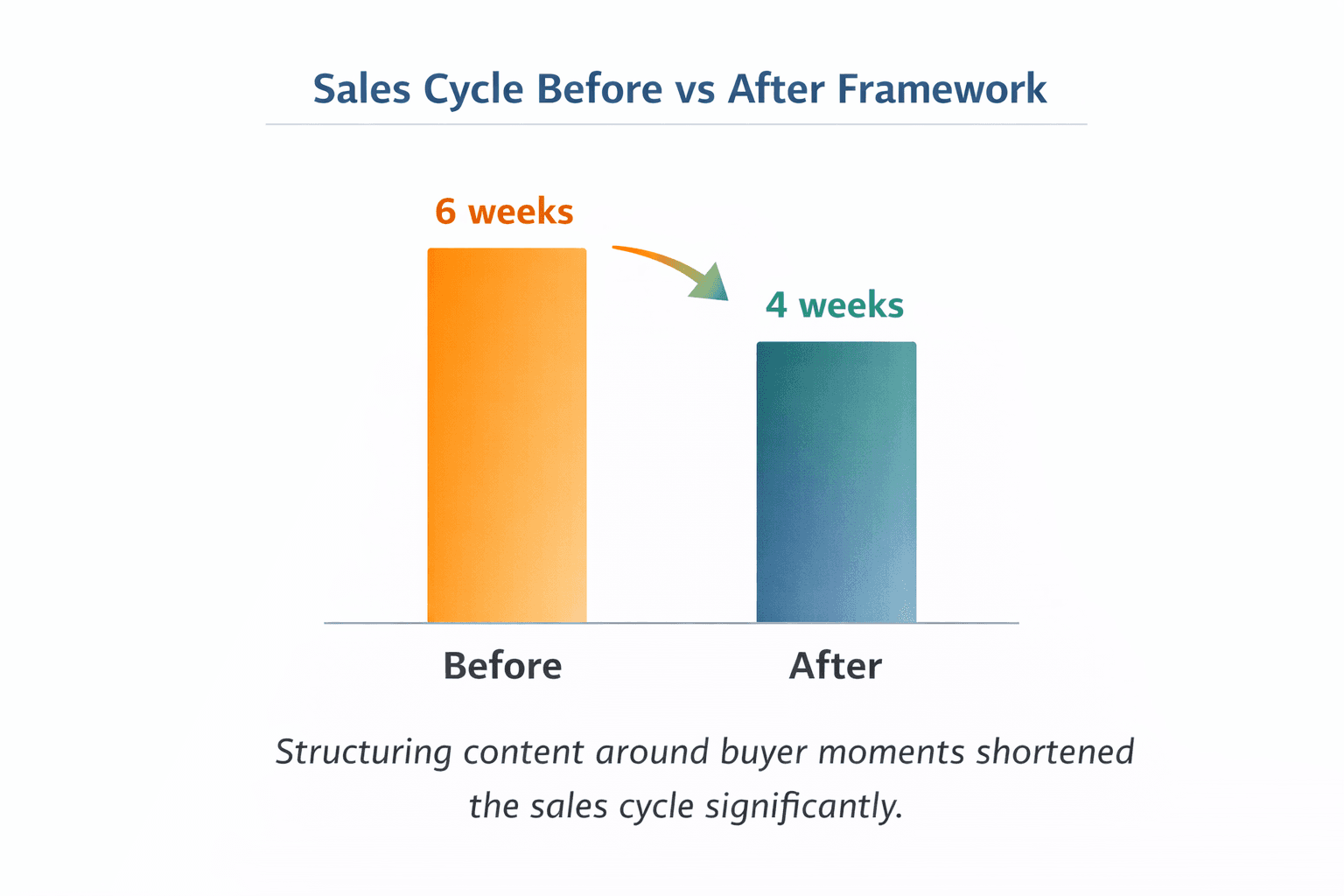
I restructured content for a Series B dev tools company using this exact model.
Source: author
Their sales team was walking prospects through the same “how we’re different from X” conversation on every call.
We turned that explanation into a comparison page and two implementation stories.
The sales cycle dropped from six weeks to four.
Not because the product changed — but because buyers arrived ready to decide.
I’ve seen the same pattern in earlier-stage companies.
A seed-stage analytics tool had a blog pulling 40K monthly visitors — and a demo conversion rate under 1%.
The content was good. It just wasn’t mapped to anything.
After restructuring around these three layers, demo requests doubled in two months without touching traffic.
This is where revenue finally catches up with traffic.
Why this works (and most frameworks don’t)
This framework doesn’t force readers forward.
It meets them where they already are.
Founders don’t wake up wanting to be “nurtured.”
They want to feel:
- less confused
- less alone
- more certain they’re not making a bad call
When content is structured around buyer moments, conversion stops being mysterious.
What to do next (start here)
You don’t need more content.
You need alignment.
Ask yourself:
1. Which buyer moment do we actually support today?
2. Where do people drop off emotionally, not just analytically?
3. What content does sales rely on when explaining things manually?
Fix those gaps first.
The teams that fix structure before scale don’t just convert better.
They stop questioning whether content is worth the effort.
This is how I approach every engagement — structure before scale, buyer moments before content calendars.
If your content is working on everything except revenue, that’s the gap I fix.